

Keeping a toilet clean is one of the most repetitive bathroom chores — and one of the least enjoyable. That’s why automatic toilet cleaners have become so popular: they promise a consistently clean bowl without scrubbing, without harsh chemicals, and without constant maintenance.
But how do these cleaners actually work?
Are they safe for your toilet, plumbing, septic system, and pets?
And which type works best — bowl tablets, rim hangers, or tank-based systems?
This guide breaks it all down.
1. What Types of Automatic Toilet Cleaners Exist?
Automatic cleaners generally fall into three categories, and each works very differently:
1) Bowl Tablets (Blue Tablets)
You drop a tablet directly into the bowl or tank, and it dissolves quickly.
Pros
- cheap
- easy to find
Cons
- chlorine-based → can damage rubber seals
- strong smell
- fades unevenly
- stains some porcelain
- dissolves too fast (1–2 weeks max)
Plumbers strongly discourage chlorine tablets inside the tank.
2) Rim Hangers (“baskets”)
Clips that sit under the rim and release cleaner with each flush.
Pros
- visible, easy to replace
- adds short-term freshness
Cons
- only cleans one side of the bowl
- looks unattractive
- doesn’t prevent buildup in the tank or under the waterline
3) Tank-Based Automatic Cleaning Systems
A cartridge or slow-release block sits inside the toilet tank, and each flush brings a small, controlled amount of cleaning solution into the bowl.
Pros
- most even distribution of cleaner
- no visible device
- consistent long-term cleaning
- safe when using pH-balanced formulas
- lasts 2–4 months depending on household size
Cons
- requires opening the tank once every few months
- results depend on formula quality
Tank systems are considered the most effective for hands-off cleaning because they treat the water before it reaches the bowl.
2. How Do Tank-Based Automatic Cleaners Actually Work?
Modern cleaners use slow-diffusion technology:
- A cartridge sits in the toilet tank.
- Each flush pulls a tiny, controlled dose of cleaner into the overflow tube.
- The solution enters the bowl only during flushing.
- The bowl stays cleaner between flushes because residue prevents mineral buildup and rings.
Why slow-release formulas are better:
- They don’t shock the system with harsh chemicals.
- They avoid corrosion of metal parts.
- They maintain a stable, gentle pH (around 7.5–8).
- They reduce toilet rings and odor without bleaching.
3. Are Automatic Cleaners Safe for Toilets, Plumbing & Septic?
Short answer: Yes — if the formula is pH-balanced and non-chlorine.
Safe cleaners are:
- non-corrosive
- gentle on rubber seals and toilet components
- septic-safe
- safe for households with pets and children
- approved for continuous-contact use
Unsafe cleaners are:
- chlorine tablets
- acid-based products
- highly fragranced dyes
Plumbers universally warn against chlorine tablets inside the tank because they degrade flappers and gaskets, causing leaks.
A good automatic cleaner should be:
- pH 7.5–8 (mild alkaline)
- free of chlorine and bleach
- safe when installed inside the tank only
- kept out of direct human contact
4. Tank vs. Bowl Cleaners: Which Works Better?
| Feature | Tank System | Bowl Tablet | Rim Hanger |
|---|---|---|---|
| Cleans entire bowl | ✔ | ✘ | ✘ |
| Prevents mineral rings | ✔ | ✘ (uneven) | ✘ |
| Hidden & aesthetic | ✔ | ✔ | ✘ |
| Safe for plumbing | ✔ (if pH-balanced) | ✘ | ✔ |
| Lasts 2–4 months | ✔ | ✘ (1–2 weeks) | ✘ |
| Maintains consistency | ✔ | ✘ | ✘ |
Tank systems offer best long-term performance, especially in homes with:
- hard water
- frequent use
- ring buildup
- odor issues
- limited time for scrubbing
5. What Can You Put in a Toilet Tank to Keep It Clean?
Plumbers recommend only two safe categories:
- Mild, pH-balanced automatic cleaners — designed for tank installation
- Vinegar (in small amounts) — for descaling only
But vinegar alone won’t provide ongoing cleaning.
Never put the following in your tank:
- chlorine tablets
- dishwasher pods
- bleach
- detergents
- essential oils
- blue dye tablets
These can cause cracking, leaks, and septic imbalance.
6. How Long Do Automatic Cleaners Last?
| Household Size | Average Daily Flushes | Duration |
|---|---|---|
| 1 person | ~5–7 flushes | 3–4 months |
| 2 people | 10–14 flushes | 2–3 months |
| 3 people | 15–18 flushes | 2 months |
| 4 people | 20+ flushes | 1.5–2 months |
Most tank systems release cleaner gradually and stay effective until the final few days.
7. Who Benefits Most from Automatic Toilet Cleaners?
Automatic systems are ideal for:
- busy families
- rental properties
- elderly homeowners
- offices
- Airbnb hosts
- people who hate scrubbing
- anyone dealing with hard water stains
If your goal is continuous freshness, no scrubbing, and a consistently clean bowl, a tank-based system is the most effective option.

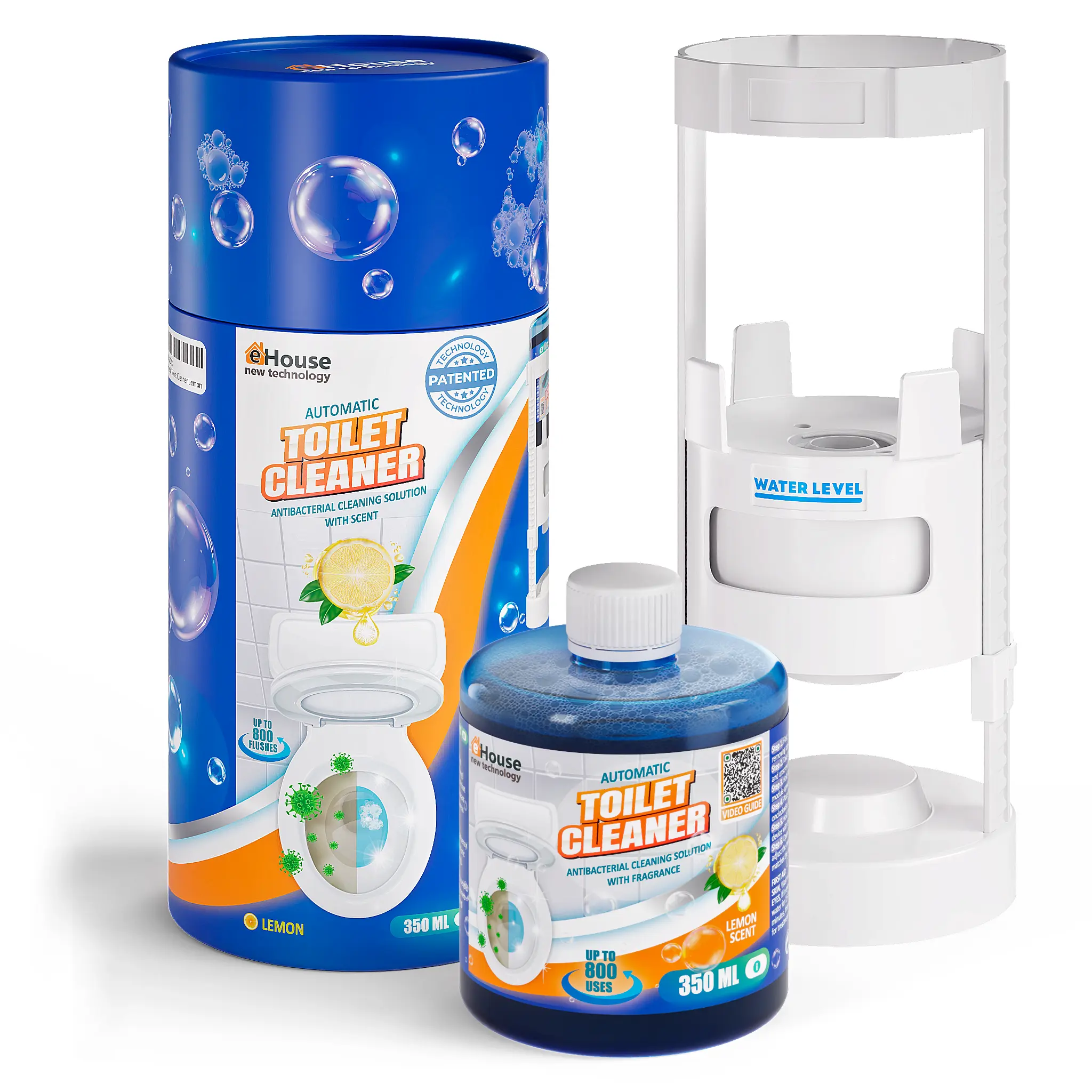
Maintain Freshness Automatically
The best way to maintain a spotless bowl is to treat the water before it reaches the bowl. eHouse sits inside your tank and releases a measured cleaning solution with every single flush.
- Easy 2-Minute Setup
- New Automatic Cleaning
Final Thoughts
Automatic toilet cleaners are not all the same.
Bowl tablets and rim hangers offer short-term fragrance, but only tank-based cleaners deliver real, continuous cleaning while being safe for modern toilets.
A good system should be:
- pH-balanced
- gentle and septic-safe
- slow-release
- hidden inside the tank
- long-lasting
With the right cleaner, your toilet practically maintains itself — and that’s exactly what an automatic cleaner should do.


