

Keeping a toilet clean is one of those chores no one enjoys, yet everyone has to deal with. Hard water stains, rings, odors, and mineral buildup can appear quickly — especially in busy households. But what if your toilet could stay clean automatically, without weekly scrubbing?
The good news: automatic cleaning is absolutely possible, and you don’t need expensive gadgets or complicated systems.
Here’s a complete, practical guide on how to keep your toilet clean without scrubbing — using modern, hands-off methods.
1. Why Toilets Get Dirty So Fast
Even if you flush regularly, the toilet bowl accumulates:
- calcium and mineral deposits
- organic residue
- hard water staining
- mildew around the waterline
The main reason: standing water.
Stagnant water leaves rings, and minerals cling to porcelain. That’s why consistent, light cleaning works better than aggressive weekly scrubbing.
Automatic cleaners aim to prevent buildup before it forms, which is the key to effortless maintenance.
2. The Easiest Ways to Keep a Toilet Clean Automatically
Here are the most effective long-term methods, from simple to advanced.
Method 1: Use an In-Tank Automatic Cleaning System
This is the most efficient method for hands-free cleaning.
A refill cartridge sits inside the tank, and every flush distributes a small amount of cleaner evenly across the entire bowl.
Benefits:
- cleans the bowl during every flush
- reduces hard water rings
- prevents odor
- hidden — no visible device
- safe when pH-balanced
- lasts 4–12 weeks depending on usage
Tank-based systems are the gold standard for automatic cleaning.
Method 2: Improve the Flush Pattern
Some toilets don’t flush strongly enough to clean the sides of the bowl. You can improve cleanliness by:
- ensuring the rim holes aren’t clogged
- checking that the flapper opens fully
- confirming the tank fills to the correct water line
A strong flush removes more residue, giving automatic systems better performance.
Method 3: Use Vinegar for Passive Cleaning
Vinegar is a mild acid that helps with mineral buildup.
How to use it:
Once every 2 weeks, pour one cup of white vinegar into the bowl. Let it sit for an hour, then flush.
This is not a full cleaning solution, but it helps minimize stains.
Method 4: Avoid Using Harsh Bowl Cleaners
Highly acidic cleaners can damage porcelain coatings and make stains come back faster.
Gentle, continuous cleaning is more effective long-term.
3. What NOT to Put in Your Tank
To preserve your plumbing and the cleaning system, avoid:
- chlorine tablets
- bleach tablets
- dishwasher pods
- essential oils
- detergents
- homemade “blue liquids”
- baking soda mixtures
These can damage rubber seals, corrode metals, and break toilet mechanics.
4. Why Automatic Cleaners Are Better Than Scrubbing
Scrubbing treats the problem after it appears. Automatic cleaning prevents it before it starts.
Benefits include:
- fewer stains
- fewer odors
- less bacteria buildup
- less mineral ring formation
- less time spent cleaning
- longer-lasting porcelain finish
It’s the same reason dishwashers, robot vacuums, and self-cleaning ovens exist — consistency wins over intensity.
5. How Long an Automatic Cleaning System Lasts
A typical in-tank cartridge lasts:
- 1 person: 2–3 months
- 2–3 people: 6–8 weeks
- 4+ people: 4–6 weeks
Duration varies based on flush frequency and tank size.

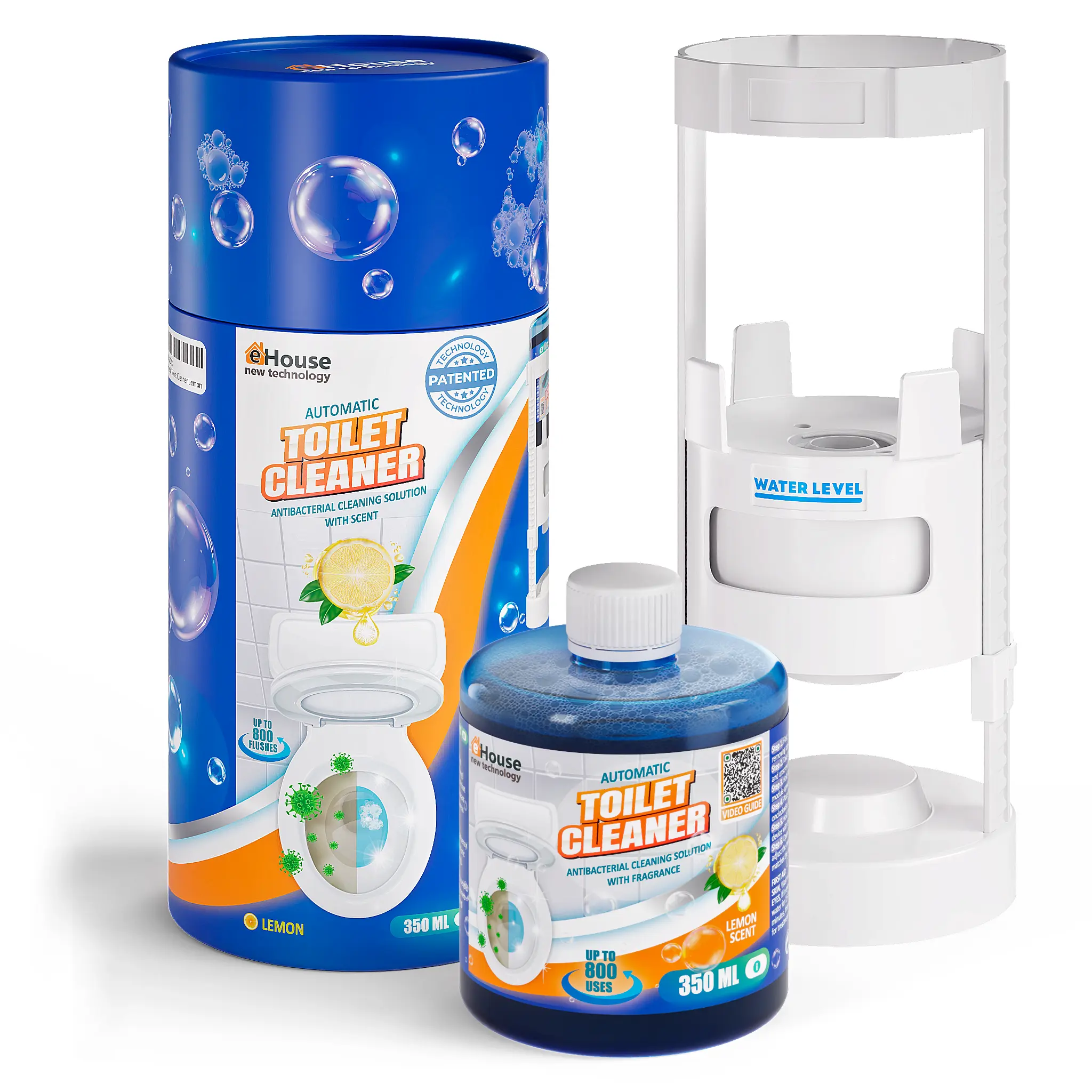
Stop Scrubbing. Start Flushing.
The smartest way to maintain a clean bowl is treating the water inside the tank. eHouse automatically conditions the water to prevent hard water rings and buildup with every flush.
- No Scrubbing Required
- Up to 3 Months of Cleaning
Conclusion
You can absolutely keep a toilet clean without scrubbing — by using consistent, gentle, automatic cleaning methods.
Modern in-tank systems make the process effortless while reducing wear on your plumbing and keeping your bathroom fresh every day.


