

Many homeowners wonder whether automatic toilet cleaners are truly safe — for their toilets, plumbing, septic systems, children, and pets. It’s a valid question, especially considering how harsh traditional toilet chemicals can be.
Here’s a clear, science-based explanation of what makes an automatic cleaner safe (or unsafe), what to avoid, and what pH-balanced formulas mean.
1. The Safety Question: Why It Matters
Most safety concerns come from older products, especially chlorine tablets. These can:
- corrode metal parts
- damage rubber seals
- discolor porcelain
- create strong chemical fumes
Modern automatic cleaners are very different — especially tank-based systems with mild formulas.
2. What Makes an Automatic Cleaner Safe?
There are four pillars of safety:
1) pH Balance (Gentle Alkaline ≈ 8)
A mild alkaline formula:
- breaks down residue
- prevents ring formation
- is non-corrosive
- safe for valves and flappers
- safe for ceramic surfaces
Acidic or chlorine-based cleaners are the ones that cause damage.
2) Controlled-Dose Release
Safe systems release tiny amounts of cleaner during each flush, not large bursts of harsh chemicals.
Consistent micro-cleaning is much gentler than shock treatments.
3) Closed-Tank Placement
The cartridge stays inside the tank, meaning:
- no direct skin contact
- no aerosolized spray
- no risk for kids or pets
- no chemical smell in the bathroom
This is the biggest difference from bowl tablets or rim hangers.
4) Septic-Safe Composition
A safe cleaner must:
- break down naturally
- not disrupt microbial balance
- avoid chlorine
- avoid heavy acids
Proper automatic cleaners are formulated for septic compatibility.
3. Is It Safe for Kids and Pets?
Yes — as long as the cleaner is:
- installed inside the tank
- used as intended
- not accessible to children
There is no exposed chemical source in the bathroom.
4. The Products You Should Avoid
These are the cleaners plumbers warn against:
- Chlorine tablets — corrode rubber and metal
- Bleach-based tank cleaners — too aggressive for tank components
- Homemade “blue water” mixtures — unpredictable pH and chemical reactions
- Drop-in tablets with dyes — often contain corrosive agents
5. Septic Safety
A septic-safe cleaner is:
- biodegradable
- non-chlorine
- non-acidic
- low-toxicity
Automatic cleaners with pH-balanced formulas fit these requirements.
6. What the MSDS Confirms
A proper Material Safety Data Sheet should indicate:
- no harmful vapors
- low toxicity
- safe residential use
- compatibility with plumbing
- skin/eye irritation only in direct contact
- non-corrosive formula
This is exactly what responsible manufacturers rely on.

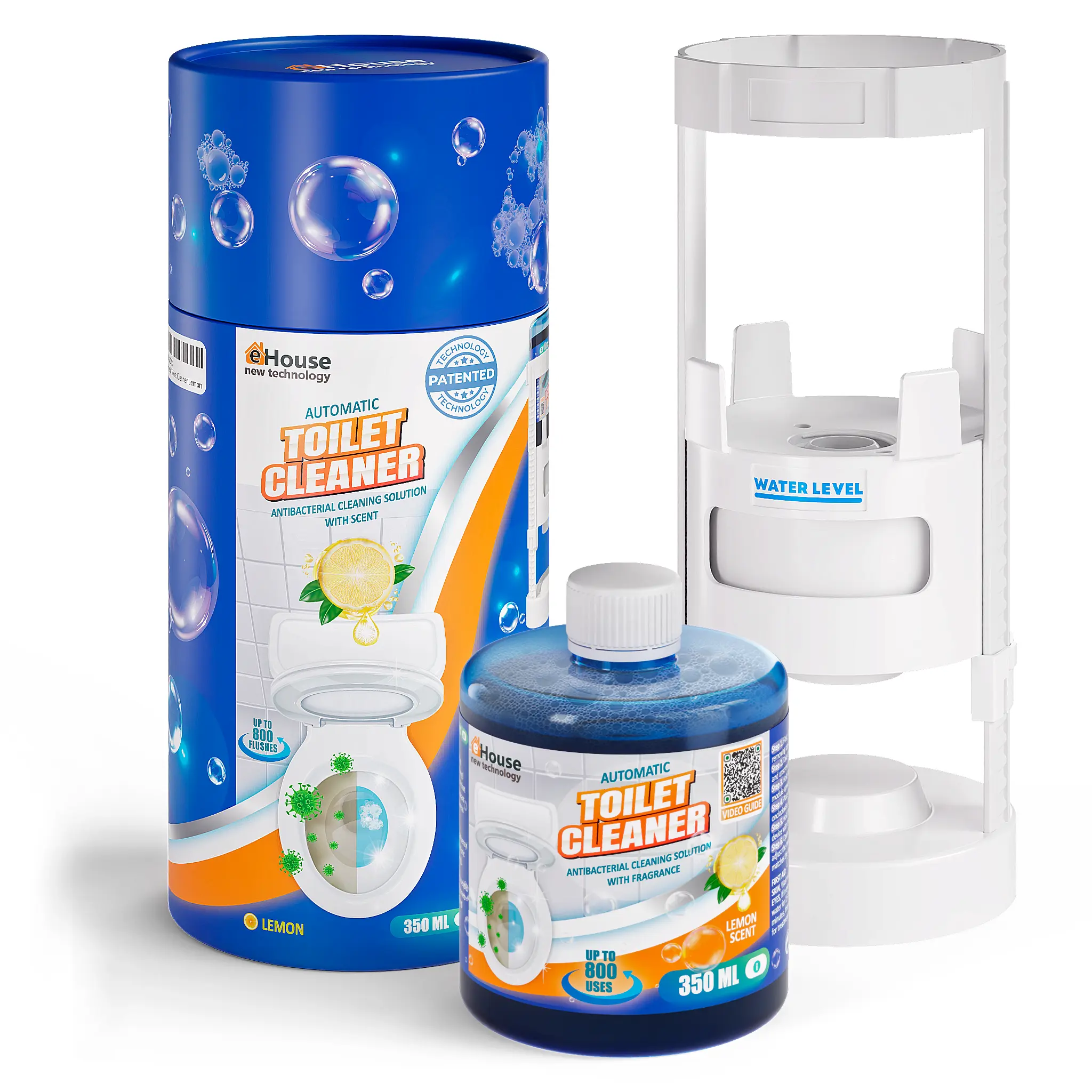
100% Safe Automatic Cleaning
Looking for a cleaner that checks all the safety boxes? eHouse uses a pH-balanced, non-chlorine formula that cleans automatically without damaging your tank or septic system.
- Plumbing & Septic Safe
- Zero Harsh Chemicals
Conclusion
Automatic toilet bowl cleaners are safe if the formula is gentle, non-chlorine, and used inside the tank.
Modern systems rely on controlled dosing and mild ingredients, making them significantly safer than traditional bowl tablets.


